
IS300 · Altezza · JZX110 · JZS171 front
Control Arm Simulator
Enter your wheels and ride height, then try our upper and lower arms. The drawing shows how the front wheel sits, seen from the front of the car.
Drag to adjust: the arrows on the upper arm, the eccentric bolt, the ride height marker, or the tire (left and right) to steer.
Start from
Stock car puts back the factory wheels, ride height and arms. Lowered on 18s is 50 mm down with the Sport upper arm. Your last setup is remembered in this browser.
Wheels and tires
Ride height
Fenders
Widened flares move the fender lip out by that much per side. The stock fender is cut back to fit them, so the panel stays the same thickness and the wheel arch opens up with it. The readout under the drawing shows whether the top of the tire sits inside the fender or pokes past it.
Front upper arm


Bushings


Lower ball joint
Both drop the lower ball joint 35 mm below the knuckle. The coilover sits on the lower arm, so the arm stays put and the knuckle and wheel lift 35 mm: the car drops by that much and the roll centre comes back up.
 CASE Roll Center Adjuster6061 billet spacers with grade 13.9 hardware$339.00
›
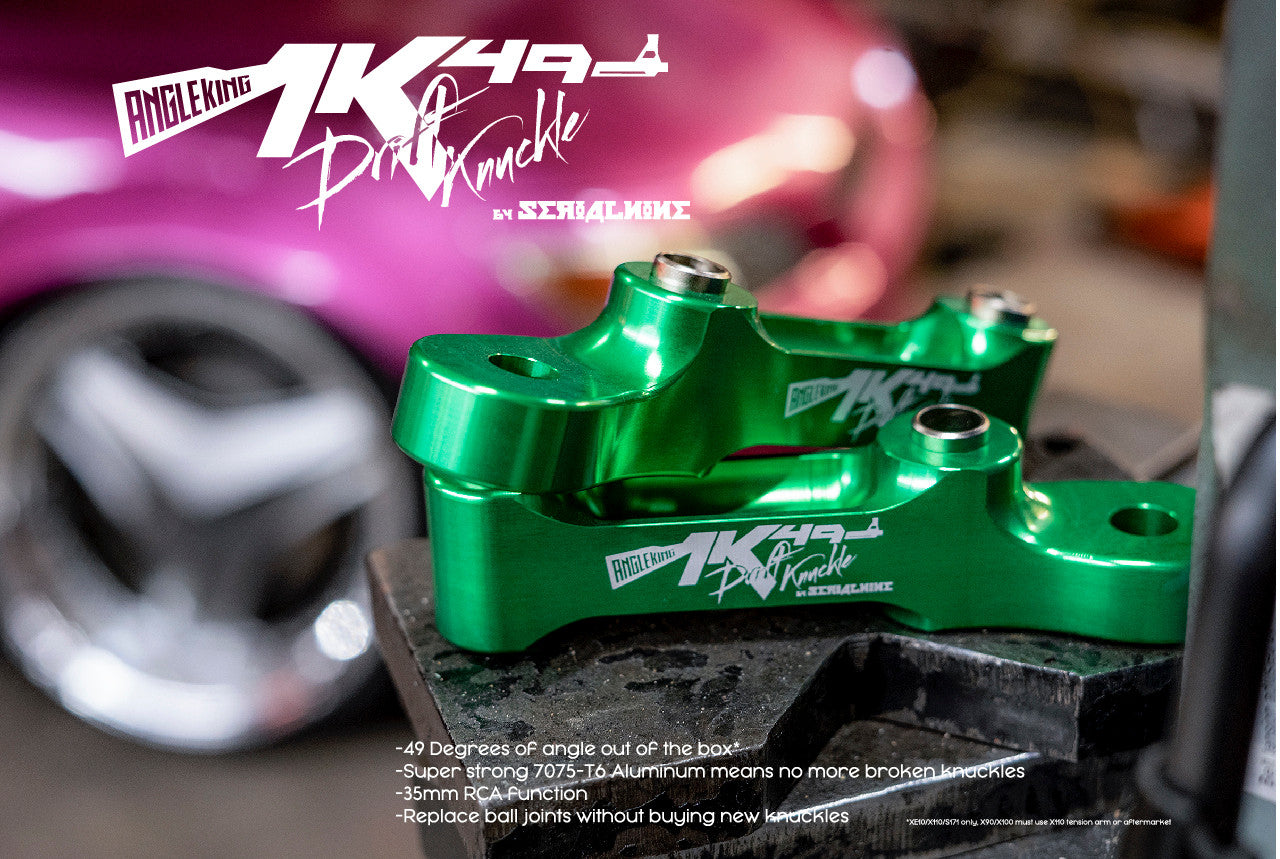
 AK49 Drift Knuckles49° of lock in 7075-T6 with the 35 mm RCA built in. Try it under Steering.$793.00
›
Front spindle
Cut just below the top of the spindle and welded in a jig, so the upper ball joint drops straight down in line. On a lowered car that flattens the kicked-up upper arm so it reaches further out: less negative camber. It also lowers the roll centre, which a CASE RCA or AK49 brings back up.
Steering
Toe
Lower eccentric bolt
13 marks each side of centre. The M12 bolt can slide 7 mm each way in its 26 mm slot, about ±0.8° of camber. Marks near centre are worth about 0.1° each and less toward the ends; the 7th mark gives about three quarters of the travel.
Adjustment ranges
How this works: a front-view model of the IS300 / Altezza / JZX110 front end built from measured SERIALNINE and factory part dimensions, matched to the Lexus IS300 factory alignment spec (−0°30′ camber at US stock height, −0°06′ at the higher Canadian height). Ride height is taken from your fender height and tire size, because a taller tire at the same fender height means the suspension sits lower. The black line on the wheel is its centreline; the dashed line is true vertical.
Numbers are per side and are estimates. Tire sidewall flex, caster and toe all change the final result, so always finish with a proper alignment.